
Introduction
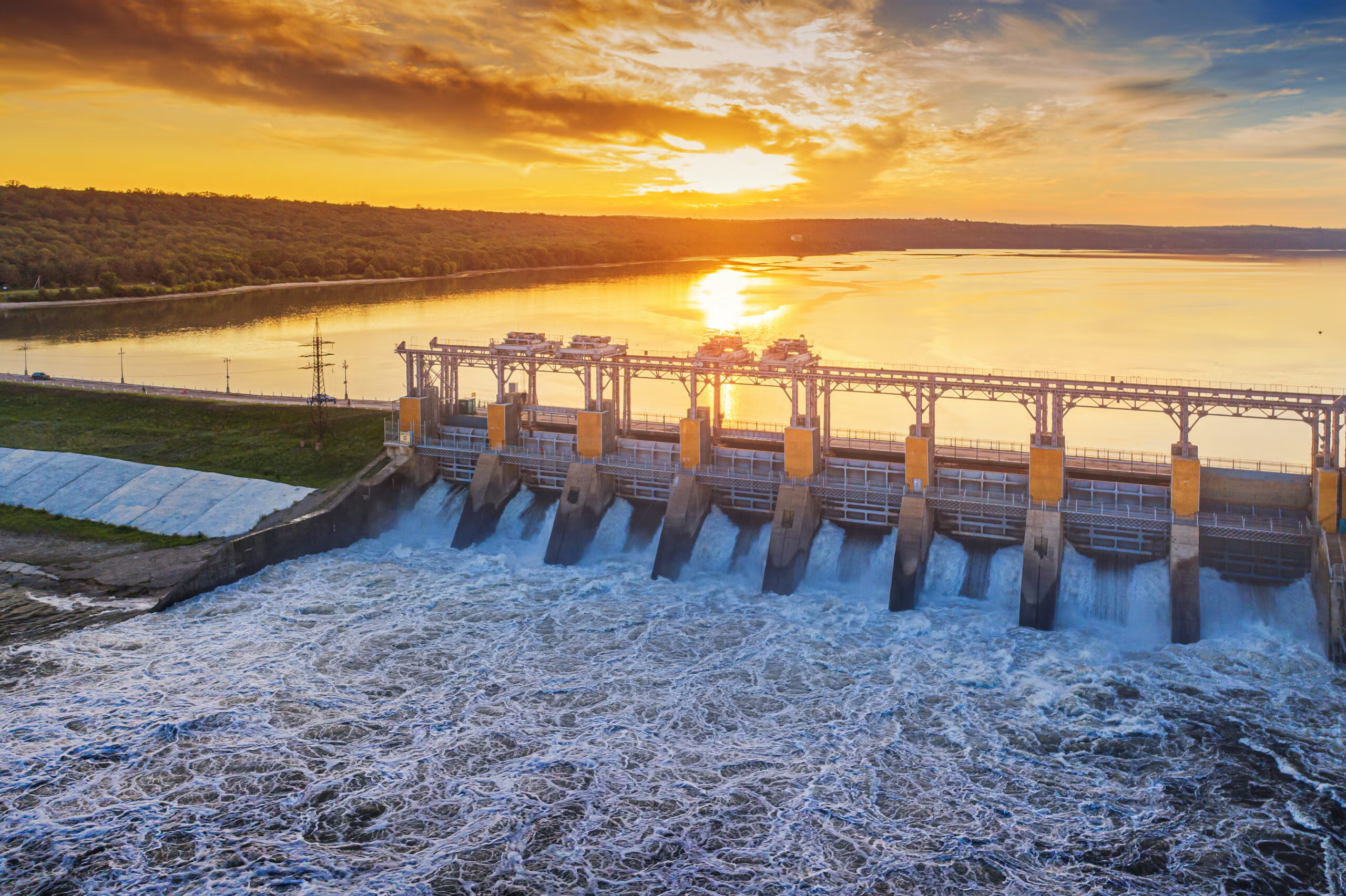
Sustainable Hydroelectricity development is becoming increasingly important in New Zealand as the demand for clean, renewable, and reliable energy continues to grow. Hydroelectricity plays a major role in reducing carbon emissions while providing long-term energy stability for communities and industries. However, Hydroelectricity projects must be carefully designed and managed to ensure they remain environmentally responsible and economically viable. Sustainable Hydroelectricity development solutions focus on balancing energy production with environmental protection, engineering efficiency, and long-term infrastructure performance. At Skye Design Construct NZ, we specialise in delivering Hydroelectricity solutions that support sustainable development goals while ensuring high-quality infrastructure outcomes. Hydroelectricity is not just an energy source; it is a long-term investment in environmental and economic sustainability.
Understanding Sustainable Hydroelectricity Development
Sustainable Hydroelectricity development refers to the planning, design, and construction of Hydroelectricity systems that minimise environmental impact while maximising energy efficiency. Hydroelectricity projects must be developed with careful consideration of water ecosystems, land use, and community impact.
Hydroelectricity sustainability ensures that natural resources are used responsibly. Hydroelectricity development must maintain river health, protect biodiversity, and ensure long-term water availability. Sustainable Hydroelectricity solutions focus on reducing ecological disruption while maintaining high energy output.
At Skye Design Construct NZ, Hydroelectricity sustainability is embedded in every stage of project planning. Hydroelectricity systems are designed to optimise water flow efficiency while reducing environmental stress.
Importance of Sustainable Hydroelectricity Solutions
Sustainable Hydroelectricity development is essential for ensuring long-term energy security in New Zealand. Hydroelectricity provides a renewable energy source that reduces reliance on fossil fuels. However, without sustainable practices, Hydroelectricity projects can negatively impact ecosystems.
Hydroelectricity sustainability solutions help mitigate risks such as habitat disruption, sedimentation, and water flow imbalance. Hydroelectricity projects must be carefully engineered to maintain ecological balance.
Sustainable Hydroelectricity also supports economic stability. Hydroelectricity infrastructure provides long-term energy production with low operational costs. This makes Hydroelectricity one of the most cost-effective renewable energy sources when managed sustainably.
Hydroelectricity Planning for Sustainability
Hydroelectricity planning is the foundation of sustainable development. Hydroelectricity projects must begin with detailed feasibility studies and environmental assessments.
Hydroelectricity planning includes evaluating water resources, terrain conditions, and energy demand forecasts. Sustainable Hydroelectricity planning ensures that projects are viable without causing long-term environmental harm.
At Skye Design Construct NZ, Hydroelectricity planning integrates sustainability principles into every design decision. Hydroelectricity systems are carefully modelled to optimise performance while minimising environmental impact.
Hydroelectricity planning also involves community consultation to ensure that Hydroelectricity development aligns with social and environmental expectations.
Hydroelectricity Design and Environmental Balance
Hydroelectricity design plays a critical role in achieving sustainability goals. Hydroelectricity infrastructure must be engineered to balance energy production with environmental protection.
Sustainable Hydroelectricity design includes fish passage systems, controlled water flow mechanisms, and erosion prevention strategies. Hydroelectricity systems must ensure minimal disruption to aquatic ecosystems.
Hydroelectricity design also focuses on improving energy efficiency. Hydroelectricity turbines and water channels are optimised to maximise output while reducing waste.
Skye Design Construct NZ ensures that Hydroelectricity design solutions are both technically advanced and environmentally responsible.
Hydroelectricity Construction and Sustainable Practices
Hydroelectricity construction must follow strict environmental guidelines to ensure sustainability. Hydroelectricity projects often take place in sensitive natural environments, making construction management essential.
Sustainable Hydroelectricity construction includes minimising land disturbance, controlling sediment runoff, and protecting surrounding ecosystems. Hydroelectricity construction teams must follow environmental best practices at all times.
At Skye Design Construct NZ, Hydroelectricity construction is managed with a strong focus on sustainability. Hydroelectricity infrastructure is built using efficient methods that reduce environmental impact while maintaining structural integrity.
Hydroelectricity construction also requires careful material selection to ensure durability and long-term performance.
Hydroelectricity Resource Efficiency and Optimization
Sustainable Hydroelectricity development focuses on optimising the use of natural water resources. Hydroelectricity systems must be designed to ensure maximum energy production from available water flow.
Hydroelectricity efficiency involves advanced engineering techniques such as turbine optimisation and flow regulation systems. Sustainable Hydroelectricity ensures that water resources are used responsibly without overexploitation.
Hydroelectricity optimisation also reduces operational costs and improves long-term performance. Hydroelectricity systems designed for efficiency require less maintenance and deliver more consistent energy output.
Skye Design Construct NZ prioritises Hydroelectricity efficiency in every project to ensure long-term sustainability.
Hydroelectricity Environmental Protection Strategies
Hydroelectricity development must prioritise environmental protection to ensure sustainability. Hydroelectricity projects can impact ecosystems, so mitigation strategies are essential.
Sustainable Hydroelectricity solutions include habitat restoration, water quality management, and biodiversity protection. Hydroelectricity infrastructure must be designed to minimise ecological disruption.
Hydroelectricity environmental protection also involves monitoring water levels and maintaining natural flow patterns. This ensures that Hydroelectricity systems do not negatively affect downstream ecosystems.
At Skye Design Construct NZ, Hydroelectricity environmental strategies are integrated into every stage of development.
Hydroelectricity Technology and Innovation
Modern Hydroelectricity development relies heavily on technological innovation. Sustainable Hydroelectricity systems use advanced monitoring, automation, and control technologies to improve efficiency.
Hydroelectricity innovation includes smart sensors, predictive maintenance systems, and digital flow modelling. These technologies help improve Hydroelectricity performance while reducing environmental impact.
Hydroelectricity innovation also supports better decision-making in project planning and management. Sustainable Hydroelectricity systems benefit from real-time data analysis and performance tracking.
Skye Design Construct NZ integrates advanced Hydroelectricity technology into all projects to enhance sustainability and efficiency.
Hydroelectricity Risk Management in Sustainable Development
Hydroelectricity projects involve natural and engineering risks that must be carefully managed. Sustainable Hydroelectricity development includes identifying and mitigating environmental and structural risks.
Hydroelectricity risk management ensures that projects remain safe, efficient, and environmentally responsible. Hydroelectricity risks may include flooding, erosion, and structural stress.
Sustainable Hydroelectricity planning includes contingency measures to address potential environmental impacts. Hydroelectricity systems must be designed to withstand natural variability in water flow.
Skye Design Construct NZ ensures that Hydroelectricity risk management is fully integrated into all project stages.
Hydroelectricity Economic Sustainability
Sustainable Hydroelectricity development is not only environmental but also economic. Hydroelectricity projects must be financially viable to ensure long-term success.
Hydroelectricity economic sustainability involves cost-efficient design, effective resource management, and long-term operational planning. Hydroelectricity systems are designed to reduce maintenance costs and maximise energy output.
At Skye Design Construct NZ, Hydroelectricity projects are structured to deliver strong financial performance while maintaining environmental responsibility.
Hydroelectricity economic sustainability ensures that projects remain beneficial for both investors and communities.
Future of Sustainable Hydroelectricity Development
The future of Hydroelectricity in New Zealand is closely tied to sustainability innovation. Hydroelectricity development will continue to evolve with new technologies and improved environmental practices.
Sustainable Hydroelectricity solutions will focus on enhancing efficiency, reducing environmental impact, and integrating renewable energy systems. Hydroelectricity will remain a key component of national energy strategy.
Skye Design Construct NZ is committed to advancing Hydroelectricity sustainability through innovation and expert engineering solutions.
Conclusion
Sustainable Hydroelectricity development solutions are essential for ensuring that Hydroelectricity continues to provide clean, reliable, and environmentally responsible energy in New Zealand. Hydroelectricity must be carefully planned, designed, and constructed to balance energy production with ecological protection. Hydroelectricity sustainability involves advanced engineering, environmental management, and efficient resource utilisation. At Skye Design Construct NZ, we deliver Hydroelectricity solutions that prioritise long-term environmental and economic sustainability while ensuring high-performance infrastructure outcomes. Hydroelectricity will continue to play a vital role in New Zealand’s renewable energy future, and sustainable Hydroelectricity development ensures that this valuable resource is used responsibly for generations to come.